Why should I switch to fibre?
21/09/2026 · 3 min read
Apparently, Germany has a fibre problem. Fibre passes 28.7 million homes and businesses, but only 27.5% have actually activated an FTTH connection. A recent CIO article talks about weak demand, VDSL being good enough and even “fibre refuseniks”. I’m one of those people. Sort of.
I currently get my internet via TV cable. Fibre was brought to our building a few years ago, but coax still covers the final stretch into my flat. My contract says 150 Mbit/s downstream and 30 upstream; in practice I usually get around 200 down and 20 up for €29.99 a month. I live alone, video calls work, downloads work, and I can stream the Giro and Roubaix without buffering. I have a properly configured system that does exactly what I need it to do.
I could now get FTTH all the way into my flat. A comparable 150 Mbit/s plan would cost about €5 more per month and give me 75 Mbit/s upstream. That extra upload would genuinely be useful for running a VPN back home while travelling, so there is a real benefit. It’s just not a very big one.
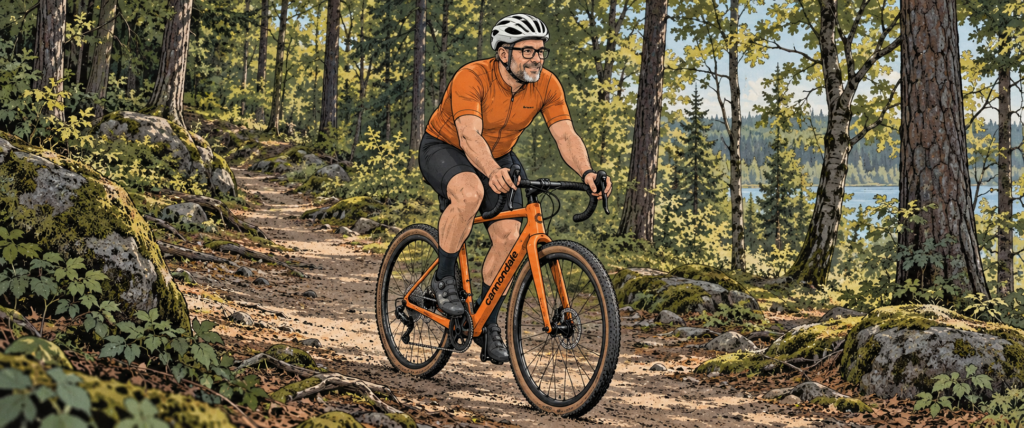
Switching, meanwhile, comes with a collection of small annoyances. I recently bought a new cable FRITZ!Box, and my home network, including AdGuard Home, is set up exactly the way I want it. I could probably migrate the whole thing in an hour or two. That’s not much, but given the choice between spending two hours rebuilding a perfectly good home network and spending two hours riding Amadeus through the forest, I know where I’d rather be.
And before any of that, there’s the installer appointment. You know the one: sometime between 8am and 6pm. Apparently fibre travels at the speed of light, but the installer still requires a ten-hour time window. Then I’d probably have to allow for some downtime while everything gets switched over — perhaps half a day without internet if things don’t line up perfectly.
Cycling fans will know the idea of marginal gains, famously associated with Dave Brailsford and Team Sky: lots of tiny improvements that add up to a meaningful advantage. That makes sense when you’re trying to win races. My internet isn’t racing; it just needs to stream the Giro and Roubaix. And marginal gains come with marginal frictions: five euros here, new hardware there, an installer appointment, possible downtime and a couple of hours of my time. None of those things is a big deal. Neither, for me, is the gain.
My parents faced a completely different calculation. They live in their own house in the countryside, where even the fastest internet available to them was slow. Fibre gave them 150 Mbit/s for the first time, while the connection into the house, including the groundwork, was subsidised and free. They plan to stay there as long as they can. For them, this wasn’t a marginal gain at all. Fibre solved an actual problem, so they switched.
It reminds me of a neighbour in her eighties whose old analogue telephone connection was being replaced by more expensive IP telephony. She didn’t want internet; she wanted a telephone. I suggested a decent mobile phone and a cheap plan, but she wanted the landline she knew how to use. The new technology solved no problem she actually had.
That’s what bothers me about calling customers fibre refuseniks. Customers don’t owe providers enthusiasm for their technology, and technical superiority isn’t a value proposition on its own. If the improvement is large enough, as it was for my parents, the friction barely matters. If the improvement is marginal, all those little frictions suddenly do.
Fibre offers me an improvement. Just not enough of one to make switching worthwhile. So perhaps the question isn’t why I refuse to switch to fibre. It’s why I should.